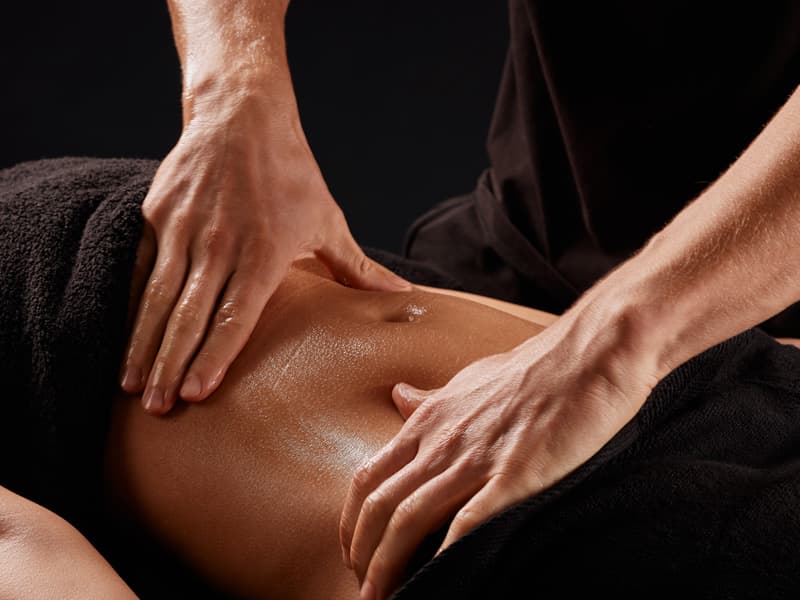
After liposuction or a tummy tuck, swelling can leave you feeling heavy and tight and make it harder to see the result of your operation. Manual lymphatic drainage is one option for easing this discomfort.
First, discuss with your treating doctor whether and when it would be suitable for you. You can also contact me to talk about your recovery and how I may be able to help.
How can lymphatic drainage help after surgery?
This gentle technique uses light, rhythmic movements of the skin to help move accumulated lymph fluid. Possible benefits for you include:
- Less visible swelling in the treated area.
- Relief from heaviness and tightness, which may help you feel more comfortable day to day.
The effect depends on the cause of the swelling and your stage of recovery. Improvement may be gradual, so we will follow how you feel and how the swelling changes between visits.
What does the research tell us about recovery?
In a study by Masson and colleagues (2014), 18 women in the later stages of recovery after liposuction or lipoabdominoplasty experienced reduced swelling and pain. They received manual lymphatic drainage alongside therapeutic ultrasound, so the results apply to the combination of both treatments.
A 2023 review by Marxen and colleagues also notes that research in cosmetic procedures is limited. The findings suggest possible symptom relief, but there is not enough evidence to promise faster wound healing or a better final cosmetic result.
What matters after liposuction and a tummy tuck?
After liposuction, swelling can persist while the tissues recover. Discuss how it is changing at your follow-up appointment so we can adapt care to your stage of recovery.
After a tummy tuck (abdominoplasty), we pay particular attention to the incision, any surgical drains and your body position. We choose the areas to work on with your surgeon’s instructions and your comfort in mind.
If you have had lymph nodes removed or have diagnosed lymphoedema, you need a plan from a lymphoedema specialist. This may include lymphatic drainage, compression, exercise and skin care.
When can I start, and what should I ask my surgeon?
The right time to start depends on your operation, how your wounds are healing and how you feel. Your treating doctor knows these details. During your conversation, ask:
- Is manual lymphatic drainage suitable for my swelling now?
- When can it start, which areas can be treated, and what body position is safe? Mention incisions, dressings and drains.
- How should it fit around my compression garment and other aftercare?
Clarify whether the recommendation is for manual lymphatic drainage or a device-based treatment. Your doctor’s guidance will help us plan a session that suits your needs.
What happens at the first appointment?
We begin by talking about your operation, your doctor’s recommendations and the areas that concern you. Please also share which medicines you take. Together, we agree on the areas to treat and find a comfortable position.
The movements are slow and the pressure is light. We may start away from the swollen area to help fluid drain. The massage should not be painful. If you feel uncomfortable pulling or pain, let me know straight away so we can stop and reassess. The session does not involve treating wounds or handling surgical drains.
For care at home, ask a specialist for individual guidance before massaging the operated area yourself. Keep following your doctor’s instructions for compression garments, follow-up appointments, medication and other aftercare.
How will I know if it helps, and how many sessions will I need?
Notice whether the area looks less swollen and feels less heavy or tight. The number and frequency of sessions depend on these changes and your doctor’s recommendations.
If several visits bring no improvement, discuss with me and your treating doctor whether to continue or change the approach. If symptoms worsen, contact your treating team without waiting for your next massage.
Which symptoms need medical attention?
A change in symptoms sometimes needs a medical check. Postpone massage and seek help if you notice any of the following:
- Breathlessness or chest pain: seek emergency help immediately.
- New swelling and pain in just one leg, especially with redness: you need urgent medical assessment for a possible blood clot.
- Fever, red and hot skin, wound discharge or increasing pain: contact your surgeon promptly to check for infection or another complication.
- A new lump or increasing localised swelling near the incision: your surgeon should check for a pocket of fluid called a seroma. Do not squeeze it or try to drain it through the wound.
Massage is postponed with an active infection or a suspected blood clot. If you have heart or kidney disease, ask your doctor whether lymphatic drainage is suitable for you and let me know when we speak.
Lymphatic drainage after surgery at Voder Studio
At Voder Studio in Sofia, I offer manual lymphatic drainage as supportive care after surgery.
You are welcome to call me on +359 888 16 55 88, even if you are still considering treatment. We can talk about how you are feeling and any questions you have.
Drawing on my experience working with patients and your treating doctor’s recommendations, I can help you consider whether lymphatic drainage could be suitable for your recovery and what to expect from it.
References:
- Cleveland Clinic. Lymphatic Drainage Massage. Technique, possible benefits and limitations.
- American Society of Plastic Surgeons (ASPS). Liposuction Recovery. Postoperative care and questions to ask your surgeon.
- American Society of Plastic Surgeons (ASPS). Tummy Tuck Recovery. Wound care, surgical drains and compression garments.
- Masson et al. (2014). Manual lymphatic drainage and therapeutic ultrasound in liposuction and lipoabdominoplasty post-operative period. Indian Journal of Plastic Surgery, 47(1), 70-76. Assesses combined treatment, not massage alone.
- Marxen et al. (2023). The Utility of Lymphatic Massage in Cosmetic Procedures. Aesthetic Surgery Journal Open Forum, 5, ojad023. The review notes the limited research in this area and the need for further studies.
- NHS. Lymphoedema: Treatment. The roles of compression, exercise, skin care and lymphatic drainage.
- NHS. Deep Vein Thrombosis (DVT). Symptoms and when to seek urgent medical help.
- Cleveland Clinic. Seroma. Recognising and medically assessing a localised pocket of fluid after surgery.
- Macmillan Cancer Support. Lymphatic Drainage for Lymphoedema. Specialist techniques and learning self-care for lymphoedema.